Morgan Coleman · 20 September 2026
Shifts in User Navigation Patterns Within Specialized Knowledge Networks After Ownership Transitions
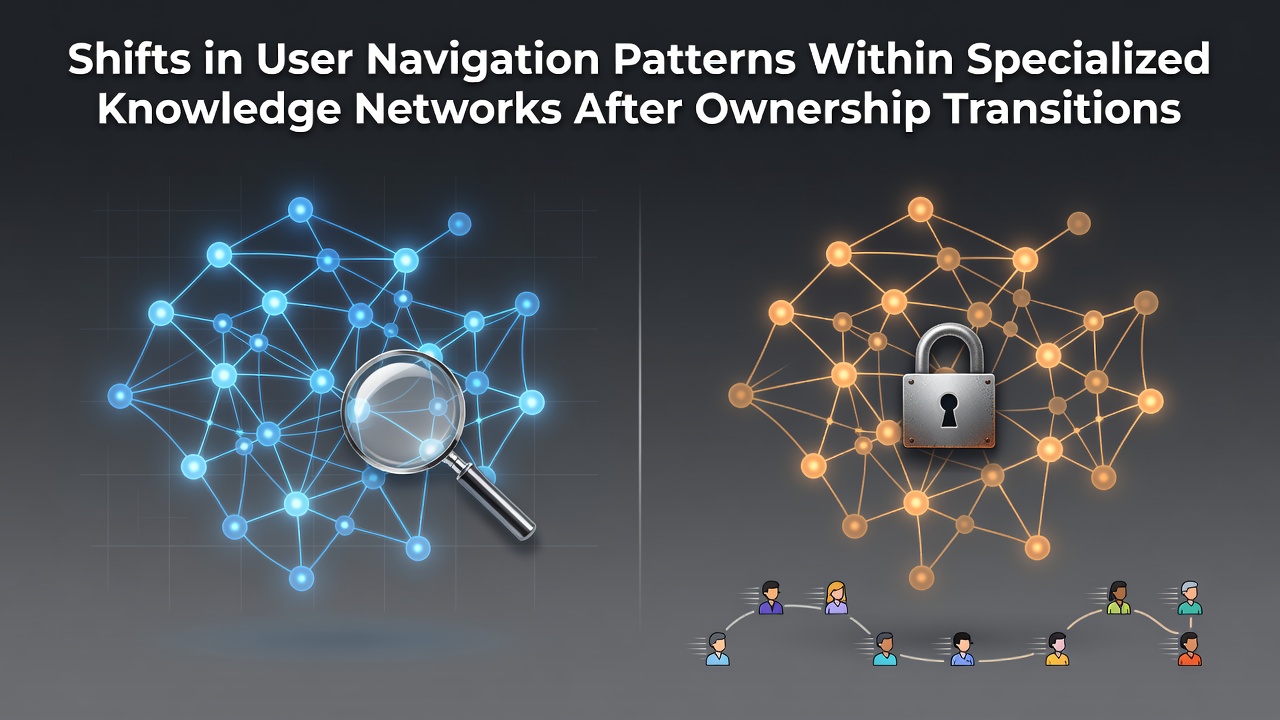
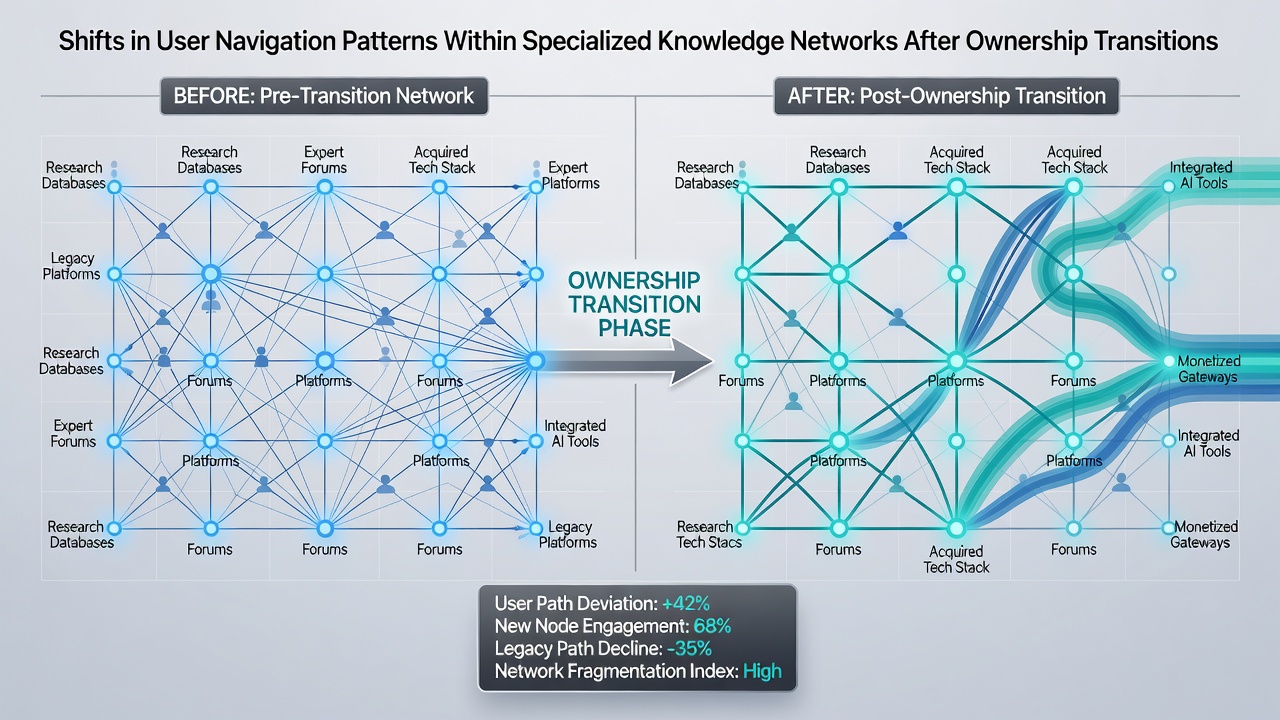
Specialized knowledge networks such as professional forums, technical wikis and expert discussion platforms often experience measurable adjustments in how visitors move through content after ownership changes hands, and data collected across multiple platforms shows these patterns emerge within weeks rather than months. Researchers tracking clickstream data note that new owners frequently introduce updated interfaces or moderation policies which redirect attention toward different sections of the site, while long-standing pathways to archived threads or user-generated resources receive less traffic over time.
Initial Adjustments in Search and Browse Behaviors
Platform acquisitions completed in early 2025 led analysts to examine navigation logs from several mid-sized technical communities, and the resulting figures reveal that users began relying more heavily on internal search functions immediately after redesigns rolled out. Instead of clicking through established category hierarchies, visitors in these networks started entering keywords at higher rates, a shift that coincided with altered menu structures and the temporary removal of certain legacy tags. According to reports compiled by Statistics Canada on digital platform usage, such changes can increase average search queries per session by up to 28 percent during the first quarter following a transfer of control.
Those who monitor engagement metrics across academic and professional networks point out that bounce rates on older discussion threads tend to climb when new owners prioritize fresh content feeds, yet returning members adapt by creating personal bookmark collections or external note systems to maintain access to previously favored materials. This adaptation occurs alongside a broader redistribution of page views toward newly promoted sections, while older material sees reduced direct navigation from the homepage.
Role of Policy Updates in Redirecting User Flows
Ownership transitions frequently bring revised community guidelines, and these updates influence where participants spend their time once they log in. Data from the European Commission's 2025 digital services monitoring exercise indicates that networks enforcing stricter verification requirements after acquisition observe a 15 percent rise in users accessing profile-management pages before proceeding to main content areas. Such detours become routine as visitors confirm account status or adjust notification settings, which in turn lengthens the path to core knowledge resources.
Observers tracking September 2026 platform metrics have documented further refinements in navigation depth, with users drilling down into sub-forums at different speeds depending on whether new owners have introduced topic clustering or AI-assisted recommendations. These tools alter traditional linear browsing sequences, and participants often discover related material through suggestion panels rather than manual category selection.
Comparative Data Across Geographic Regions
Studies conducted by the Australian Bureau of Statistics on online community participation highlight parallel trends in regional knowledge networks, where ownership shifts prompt users to favor mobile-optimized pathways over desktop hierarchies. Mobile traffic patterns show increased use of swipe gestures and filtered result lists, while desktop sessions retain more traditional multi-page traversals for in-depth research. Researchers note that these divergences become more pronounced when new owners roll out region-specific content prioritization, which can redirect traffic away from globally shared archives toward localized discussions.
Industry reports from the OECD further illustrate how cross-border knowledge platforms adjust internal linking structures after acquisition, and participants respond by developing hybrid navigation strategies that combine platform search with external reference managers. This behavior reduces reliance on any single site's default menu system and distributes attention across multiple entry points.
Longer-Term Effects on Content Discovery
Over successive quarters following ownership transitions, network operators report sustained changes in how users locate archived material, with many shifting toward chronological filters or author-specific indexes rather than topic-based browsing. Figures released by the Pew Research Center in late 2025 demonstrate that members of technical communities increase their use of advanced search operators by roughly 22 percent within six months of a platform sale, reflecting a need to bypass altered front-end layouts. These operators allow direct access to older contributions without following the revised main navigation routes.
Platform administrators also observe that new ownership can accelerate the adoption of external tools such as browser extensions or third-party aggregators, which then serve as alternative gateways into the network. Traffic arriving through these indirect routes tends to land deeper within the site structure, bypassing homepage or landing page interactions altogether.
Conclusion
Ownership transitions in specialized knowledge networks consistently correlate with measurable shifts in user navigation patterns, and the evidence accumulated through multiple regional studies confirms that search reliance, policy-driven detours and external tool adoption represent the primary adjustments. Data gathered through September 2026 continues to track these developments as platforms stabilize under new management, providing further insight into how community members adapt their pathways to information over time.