Ines Washington · 6 September 2026
The Hidden Mechanics of Crawler Behavior After Domain Authority Transfers
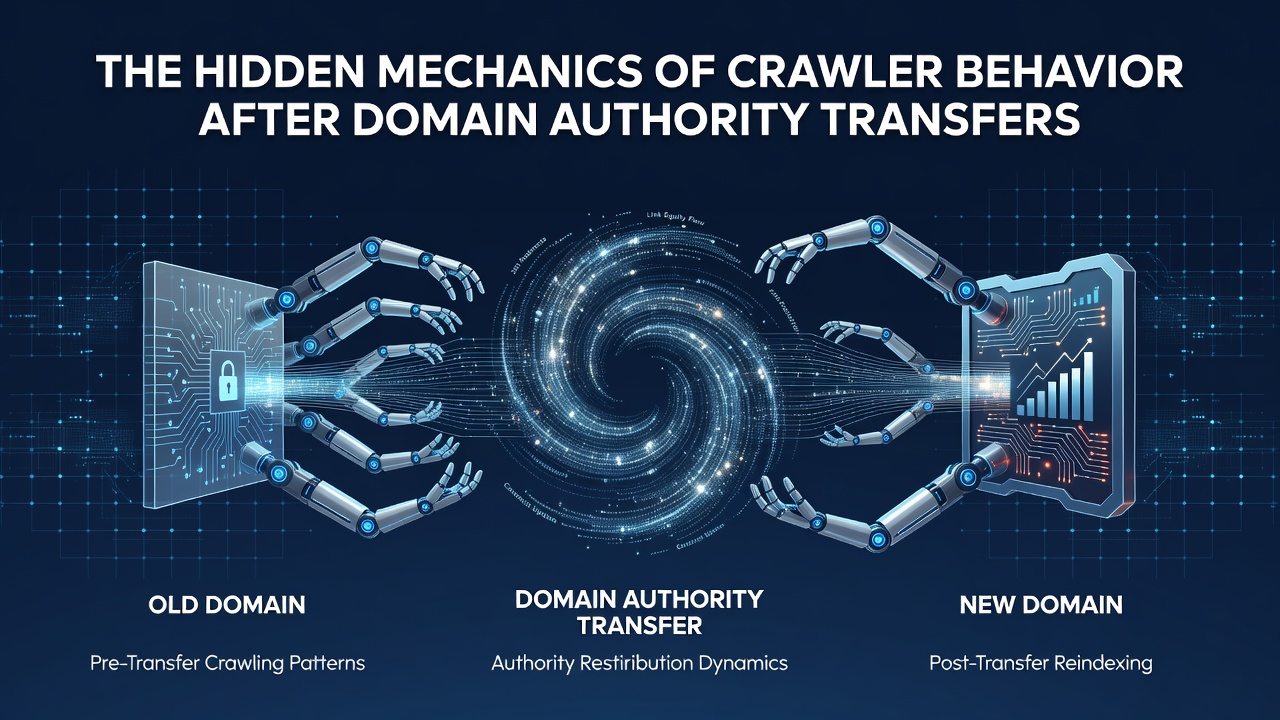
Domain authority transfers occur when ownership of a website moves from one entity to another through registrar changes or sales, and search engine crawlers respond by re-evaluating historical signals, backlink profiles, and content patterns before assigning new trust metrics. Researchers at institutions focused on web architecture have documented that these evaluations involve multiple layers of verification that extend beyond simple URL checks, including WHOIS data cross-references and crawl history comparisons that can span several weeks or months depending on the domain's prior activity levels.
Initial Crawler Detection Phases
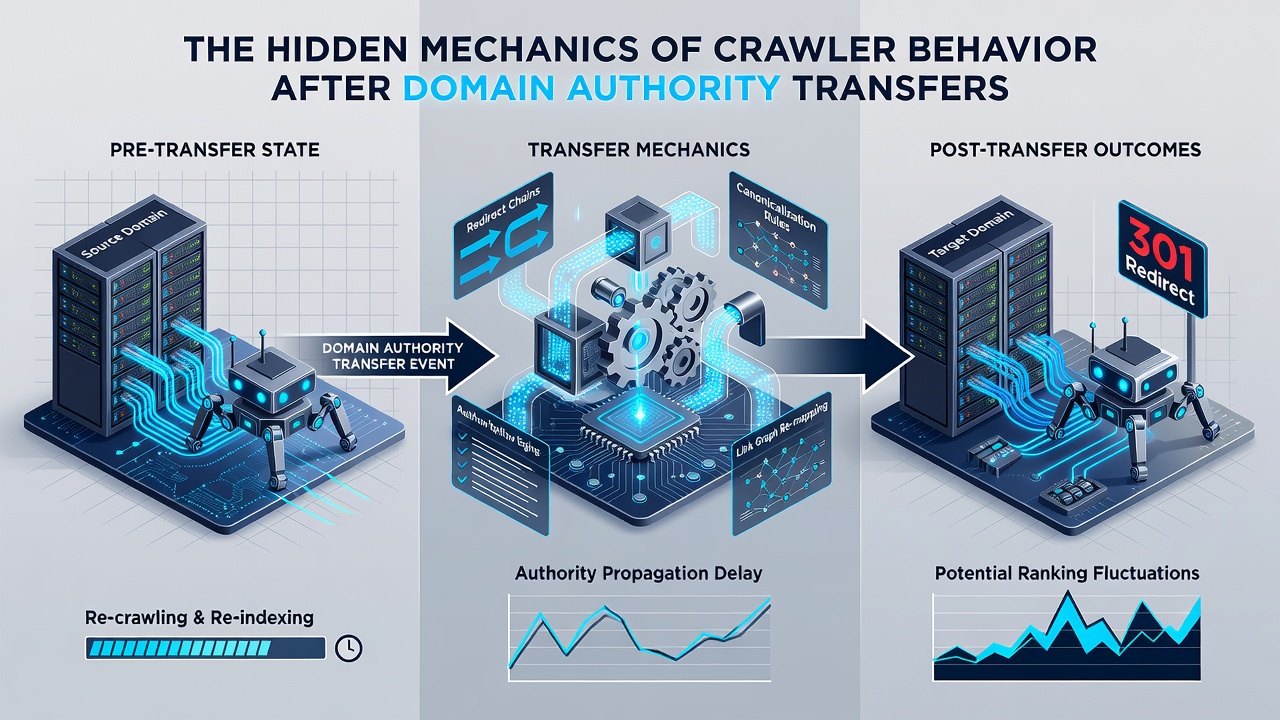
Crawlers initiate detection through scheduled indexing cycles that pick up registrar updates, and this process accelerates when new DNS records propagate across global servers while existing backlinks continue to point to the transferred domain. Data from web infrastructure studies shows that major engines like those operated by Google and Bing prioritize domains with established authority by deploying additional crawl budget allocations, yet they simultaneously flag potential manipulation through pattern analysis of link velocity and anchor text distributions that remain consistent post-transfer. Observers note that September 2026 brought increased scrutiny in automated systems following updates to crawler protocols that emphasize real-time verification against archived snapshots maintained by organizations such as the Internet Archive.
Those who monitor these systems report that the first wave of post-transfer crawling often focuses on root domain files and robots.txt directives, after which the process expands to individual page structures to detect any alterations in metadata or internal linking that might indicate content resets. And because authority signals accumulate over time, engines compare pre-transfer and post-transfer crawl logs to identify discrepancies in user engagement metrics pulled from browser data and server logs.
Authority Signal Reassessment Mechanics
Once initial detection completes, crawlers reassess authority through algorithmic models that weigh domain age, historical spam scores, and the geographic distribution of incoming links against current ownership records. Studies from academic groups examining information retrieval have found that transfers involving aged domains trigger deeper historical reviews, where engines consult cached versions to confirm continuity in topical focus and avoid rewarding abrupt shifts that could stem from black-hat practices. This reassessment phase typically unfolds over 30 to 90 days, during which temporary ranking fluctuations occur as new data integrates with legacy trust factors.
What's interesting is how engines handle partial transfers where only subdomains move while the main domain stays intact, since such cases require segmented crawl paths that isolate authority attributes without affecting unrelated site sections. Research indicates that external links from .edu and .gov sources receive amplified weight during these evaluations because their own stability provides stronger validation signals, and this weighting becomes more pronounced when September 2026 protocol adjustments emphasized cross-referencing with regulatory databases from bodies like the Australian Competition and Consumer Commission for consumer-facing domains.
Long-Term Behavioral Patterns
Over extended periods, crawlers establish new baselines by monitoring sustained traffic patterns and content freshness, which allows them to distinguish legitimate transfers from attempts to exploit prior authority. Figures from industry reports reveal that domains undergoing clean transfers without content overhauls retain higher percentages of their original ranking positions compared to those with extensive modifications, because engines apply continuity scoring that favors incremental evolution over sudden resets. People who track these metrics through tools connected to search console data often discover that indexation rates stabilize once the crawler confirms no violations in the transferred backlink graph.
Yet the mechanics include safeguards against link farming carryover, where engines devalue clusters of low-quality links that appear artificially preserved across ownership changes, and this filtering draws on machine learning models trained on historical manipulation cases documented in technical papers from sources including the Internet Corporation for Assigned Names and Numbers. In parallel, geographic signals play a role when crawlers adjust priorities based on server locations and regional user access patterns that shift after a transfer.
Conclusion
The hidden mechanics of crawler behavior after domain authority transfers revolve around layered verification processes that integrate historical data, real-time signals, and continuity checks to maintain search integrity across ownership changes. These systems evolve with protocol refinements, such as those observed around September 2026, ensuring that authority metrics reflect genuine value rather than inherited artifacts alone. Observers continue to analyze these dynamics through available datasets and engine documentation to understand how transfers influence long-term visibility.