Morgan Krüger · 18 October 2026
Tracing Synchronization Challenges in Distributed Tagging Systems for Thematic Internet Collections
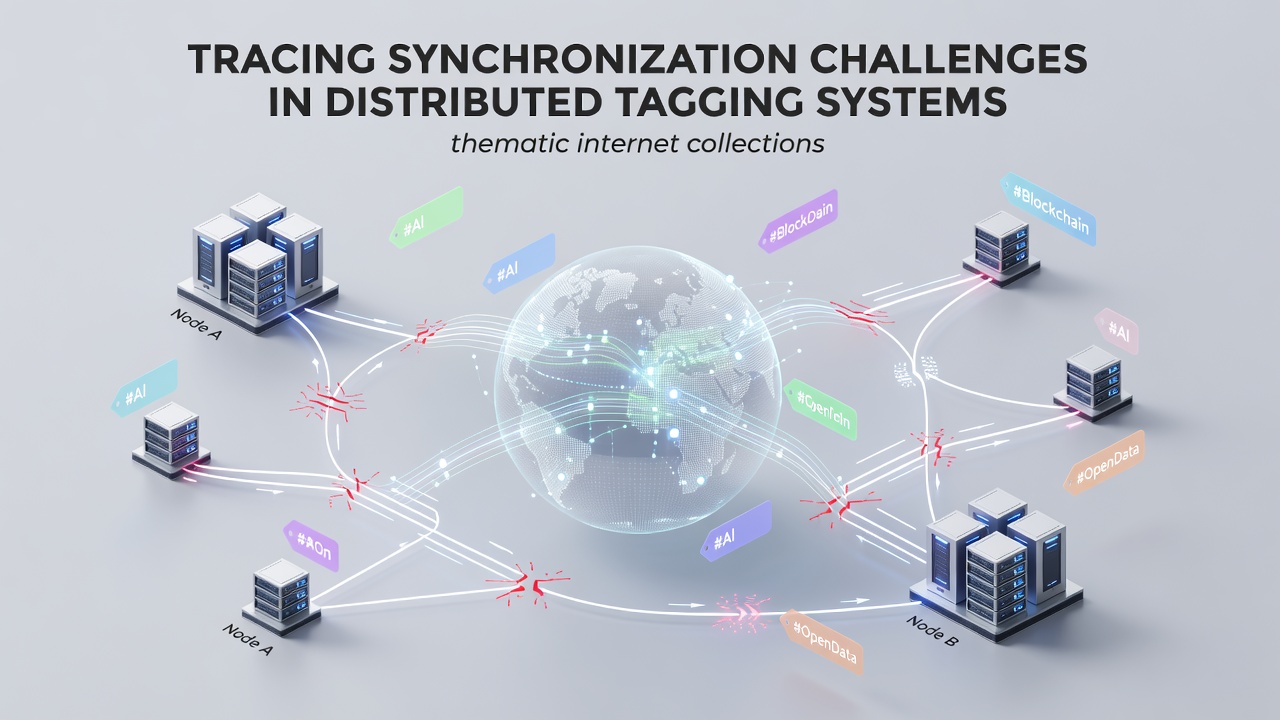
Thematic internet collections depend on tagging systems that categorize resources such as links, documents, and media across multiple platforms, and distributed setups introduce synchronization hurdles when nodes operate independently yet must maintain consistent tag data. Researchers have documented how latency, network partitions, and concurrent updates create conflicts that disrupt the coherence of these collections, particularly in environments where thematic groupings span global contributors.
Core Components of Distributed Tagging Architectures
Distributed tagging systems assign metadata to resources through decentralized nodes that communicate via protocols designed for eventual consistency, and observers note that thematic collections often aggregate tags from community-driven sources while relying on replication mechanisms to propagate changes. Data indicates that these architectures use vector clocks or timestamp-based resolution to order operations, yet conflicts arise when two nodes modify the same tag simultaneously without immediate reconciliation.
Studies from academic institutions reveal that thematic collections benefit from flexible folksonomy models, but distribution amplifies issues like tag duplication or loss when synchronization lags occur. Experts have observed that systems handling specialized topics require additional layers for conflict detection because thematic relevance depends on precise tag alignment across collections.
Primary Synchronization Obstacles
Network delays represent one major obstacle in these systems, and when multiple participants update tags on related resources, the absence of real-time coordination leads to divergent states that persist until resolution protocols activate. Research indicates that partition tolerance forces systems to choose between availability and consistency according to principles outlined in distributed computing literature, which creates trade-offs that affect thematic collections where timely tag accuracy matters for navigation.
Concurrent modifications pose another challenge, and one case documented by analysts showed how two separate nodes applied conflicting category assignments to the same resource set, resulting in duplicate entries that required manual intervention. Figures from monitoring tools demonstrate that such events increase during peak usage periods when contributors from different time zones interact with the same thematic clusters.
Impact on Thematic Collections in Practice
Thematic internet collections suffer when synchronization failures fragment tag spaces, and users encounter incomplete views of categorized resources that hinder discovery across specialized hubs. Data from operational logs shows that unresolved conflicts accumulate over time, leading to degraded search precision and reduced utility for researchers who depend on accurate thematic groupings.
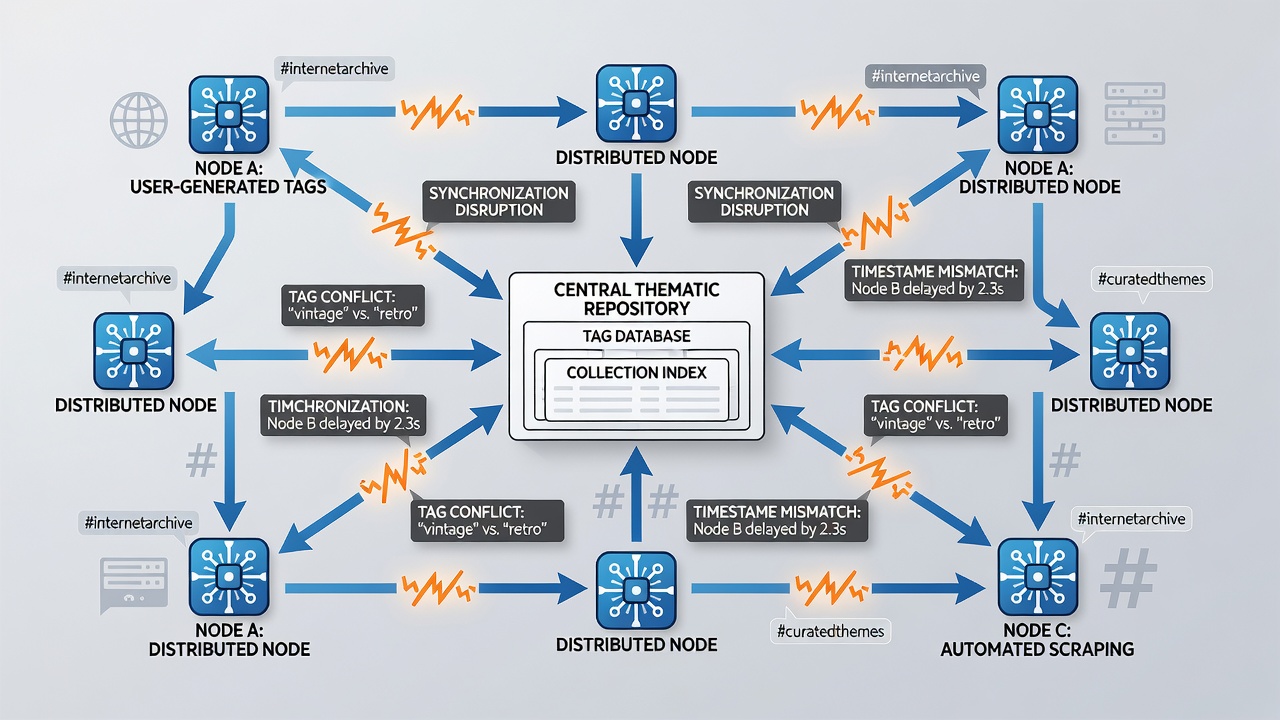
In October 2026, reports highlighted increased activity in monitoring frameworks that track tag propagation across distributed nodes, and these updates revealed patterns where thematic collections experienced higher conflict rates following expansions in contributor bases. Canadian Digital Research Alliance publications detail how such monitoring aids in identifying bottlenecks before they escalate into widespread inconsistencies.
Resolution strategies often involve merge algorithms that prioritize certain tags based on timestamps or source authority, yet these methods do not eliminate all discrepancies in complex thematic environments. Analysts have traced instances where automated merges inadvertently altered the intended meaning of category groupings, prompting further refinements in system design.
Approaches to Mitigating Synchronization Issues
Developers implement techniques such as quorum-based writes and anti-entropy processes to reduce divergence, and evidence suggests these measures improve consistency in thematic tagging setups when scaled appropriately. Industry reports from organizations like the European Research Council emphasize the value of simulation testing that replicates real-world network conditions to evaluate synchronization performance.
Additional tools include audit trails that log tag changes across nodes, allowing administrators to reconstruct histories and resolve lingering conflicts. Observers note that thematic collections gain stability when these trails integrate with visualization interfaces that highlight potential mismatches before they affect end users.
Academic studies continue to explore hybrid consistency models that blend strong guarantees for critical tags with relaxed rules for supplementary metadata, and data shows measurable reductions in error rates when such models undergo iterative testing.
Conclusion
Tracing synchronization challenges in distributed tagging systems reveals persistent complexities that stem from the interplay of latency, concurrency, and consistency requirements within thematic internet collections. Ongoing research and monitoring efforts provide data that informs refinements in architecture and protocols, while practical implementations demonstrate both the difficulties and the pathways toward more reliable tag management across distributed environments.